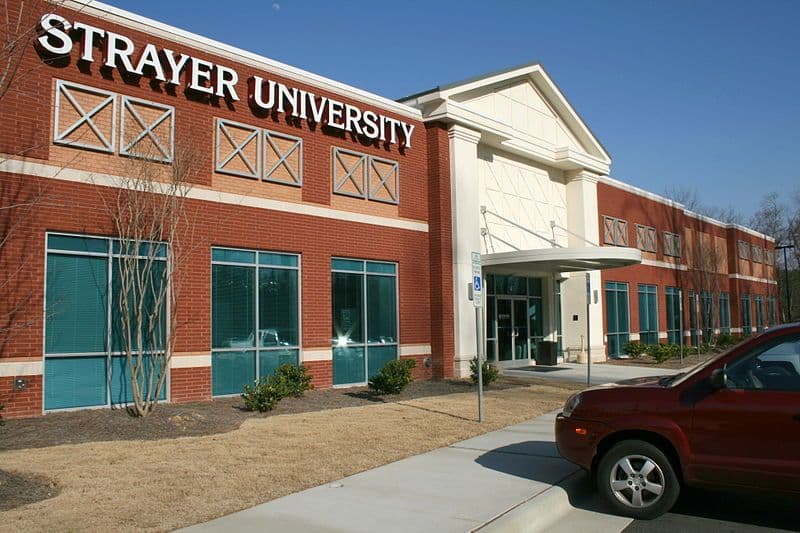
Strayer University-District of Columbia campus

Pre-Med Planning Guide

Pre-Med at Strayer University-District of Columbia

Washington, DC

Strayer University-District of Columbia is a private for-profit institution located in Washington, DC, offering primarily business, technology, and criminal justice programs. Although it does not have dedicated health science degrees, motivated pre-med students can complete essential prerequisite courses and leverage the university's urban location to pursue relevant clinical and volunteer opportunities.

While Strayer University-District of Columbia does not publicly report graduation or medical school placement rates, students committed to completing rigorous pre-med prerequisites can prepare well for medical school applications by supplementing their studies with external clinical and research experiences.

Pre-Med Strength

7.2/10

  • Research
  • Clinical Opportunities
  • Advising
  • Volunteer Opportunities
  • STEM Resources

Why Students Choose Strayer -District of Columbia For Pre-Med

University-specific pre-med advantages and pipeline signals.

  • Structured biology and chemistry sequences for pre-med prerequisites
  • Access to 4+ hospital systems near Washington
  • Active pre-health community with 3+ student organizations
  • Undergraduate research through washington, dc offers access to research institutions such as the national institutes of health (nih) and local university labs where students may seek internships or volunteer research roles to build their experience
  • Personalized planning tools in Pre-Med OS tailored to Strayer -District of Columbia students

4-Year Plan

Pre-Med Roadmap

Year-by-year milestones from freshman year through application cycle.

  • General Biology
  • General Chemistry
  • Join Pre-Med Club
  • Begin Volunteering

Your Pre-Med Journey

Track each phase in Pre-Med OS.

Successful Pre-Med Student Profile

Competitive targets for students at Strayer University-District of Columbia.

Target GPA

3.5+

Target MCAT

505+

Clinical Hours

250+

Volunteer Hours

150+

Research Experience

1–2 years

Research Opportunities

Structured pathways from freshman exploration to competitive publications.

Faculty Labs

Washington, DC offers access to research institutions such as the National Institutes of Health (NIH) and local university labs where students may seek internships or volunteer research roles to build their experience.

LimitedModerateStart: Sophomore Year

Summer Research Programs

Apply to REU, hospital affiliate, or campus summer research fellowships.

MediumCompetitiveStart: Sophomore–Junior Year

NIH / Federal Opportunities

Competitive national programs — strong GPA and prior lab experience recommended.

LimitedCompetitiveStart: Junior Year

Clinical Research

Hospital-affiliated clinical studies and patient-oriented research near campus.

LimitedModerateStart: Junior Year

Clinical Opportunities Near Campus

Hospitals and health systems accessible from Washington, DC.

MedStar Washington Hospital Center

On campus / < 5 mi

Volunteer

Medium

Shadowing

Medium

Research

Medium

George Washington University Hospital

5–15 mi

Volunteer

High

Shadowing

High

Research

High

Howard University Hospital

15–30 mi

Volunteer

High

Shadowing

High

Research

High

Children’s National Hospital

15–30 mi

Volunteer

High

Shadowing

High

Research

High

Pre-Health Student Organizations

Build leadership, service, and networking depth for AMCAS.

Pre-Med Society (if formed by students)

Membership: MCAT study groups, guest physician panels, application workshops

Leadership: Officer roles in programming and outreach

Networking: Peer mentors and alumni physician connections

Health Science Interest Groups at local partner institutions

Membership: Clinical volunteering coordination and health career exposure

Leadership: Event leads and volunteer site captains

Networking: Connections to hospital volunteer coordinators

Volunteer and community service clubs

Membership: National pre-health honor society recognition

Leadership: Chapter officers and service project leads

Networking: Inter-chapter and national pre-med network

AI Assessment

Pre-Med Fit at Strayer University-District of Columbia

Strengths

  • Clinical Opportunities: Hospital and clinic access near campus
  • Advising: Pre-health advising and peer mentor networks
  • Volunteer Opportunities: Community and clinical service pathways
  • Access to multiple hospital systems near Washington

Challenges

  • Research may require extra initiative compared to R1 peers
  • STEM Resources may require extra initiative compared to R1 peers

Recommended Strategy

  1. Join research or a structured lab by sophomore year
  2. Begin sustained clinical volunteering freshman or sophomore year
  3. Complete MCAT prep with a diagnostic by spring junior year
  4. Build strong physician and science faculty recommendations over 2+ semesters
  5. Seek out local research internships or volunteer roles at NIH and DC hospitals to strengthen your medical school application.

How Ready Are You For Medical School?

Estimate your readiness profile while planning at Strayer University-District of Columbia.

Enter at least one metric above to see your estimated readiness score.

Track Progress In Pre-Med OS

Start Your Pre-Med Journey

Build your personalized plan for Strayer University-District of Columbia with GPA tracking, MCAT prep, and medical school match tools.

  • GPA Tracking
  • MCAT Planner
  • Clinical Hours Tracker
  • Volunteer Tracker
  • Research Portfolio
  • Medical School Match
  • Application Timeline
  • AI Advisor
View full Strayer University-District of Columbia college profile

Students Also Compare

Explore pre-med guides at similar universities.